Burr Risks in Minimally Invasive Medical Devices: The Role of Burr-Free Photochemical Etching
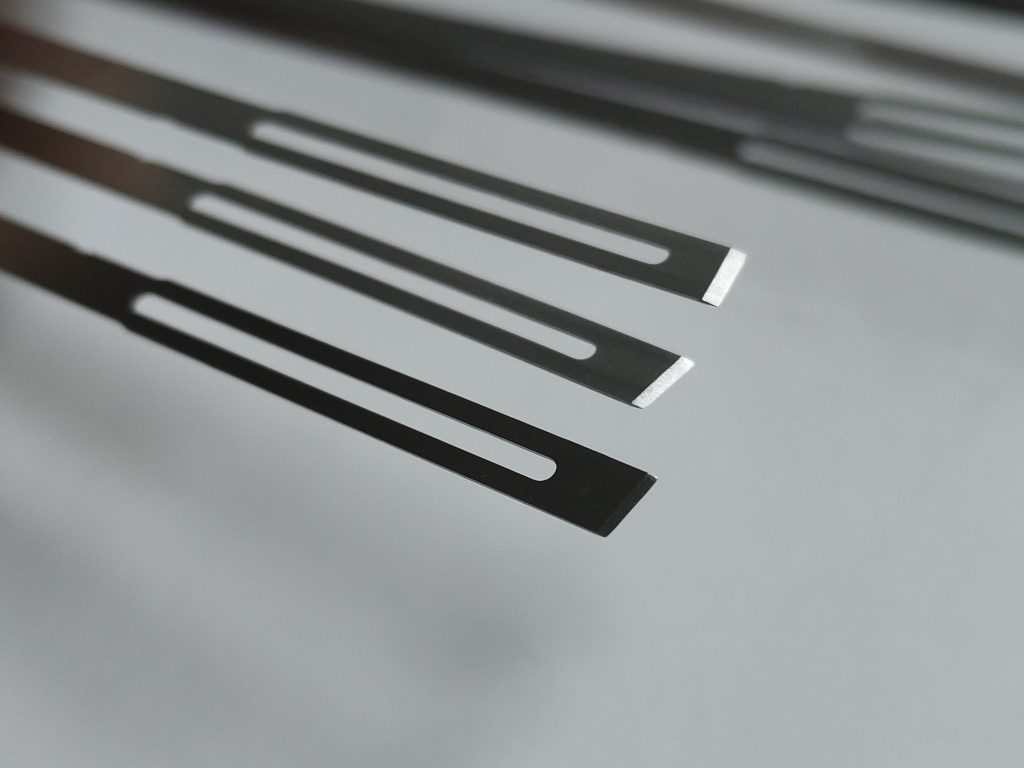
Burrs are microscopic metal protrusions generated during cutting or stamping processes. In minimally invasive medical devices, burrs can increase tissue damage risk and reduce assembly precision. Photochemical etching eliminates burr formation by removing metal through controlled chemical reactions, producing smooth and stress-free edges for precision medical components.
Why Burr Control Is Critical in Minimally Invasive Medical Devices
With the rapid advancement of minimally invasive medical technologies, surgical instruments are becoming increasingly miniaturized, precise, and structurally complex. These devices often operate in confined spaces within the human body, where dimensional accuracy and edge quality are critical. Burrs are a common by-product of traditional metal manufacturing processes such as stamping, mechanical machining, or laser cutting. These small metal protrusions may seem insignificant in general industrial products, but in medical devices they can lead to significant risks, including:
Increased risk of tissue damage
Higher friction during instrument movement
Reduced assembly precision of micro-components
Difficulties in cleaning and sterilization
Burr Formation in Conventional Manufacturing Processes
Burrs in conventional manufacturing methods are typically generated during material shearing or melting processes.
01
Stamping
Metal sheets are cut using mechanical dies. When die clearance or material thickness is not perfectly controlled, burrs can appear along the edges.
02
Laser cutting
High-temperature cutting melts the metal, which may result in micro-scale slag residues along the edges.
03
CNC machining
Cutting tools can leave small residual metal fragments at the edge of the machined surface.ree.
Although secondary deburring processes such as polishing or electrochemical deburring can remove these imperfections, they may not provide consistent results for extremely small or complex medical components.
Principles of Burr-Free Photochemical Etching
Photochemical etching is a precision manufacturing method that removes metal through controlled chemical reactions. The process typically includes:
Applying photoresist to the metal surface
Using UV exposure to define the component patternt
Chemically dissolving the unprotected metal areas
Because the material removal process does not involve mechanical cutting or thermal melting, burr formation is effectively avoided. For thin metal materials (the thickness range of 0.02 mm – 3.0 mm), photochemical etching can achieve:
Mechanical stress free
Smooth edge profiles
Highly consistent microstructures
These characteristics make photochemical etching particularly suitable for thin metal components used in medical applications.
Typical Applications in Medical Device Manufacturing
Structural Components for Minimally Invasive Instruments
Medical Filters and Micro-Mesh Componentss
Components for Medical Sensors and Electronics
As minimally invasive technologies continue to evolve, the demand for high-precision and burr-free metal components in medical devices will continue to grow.
Photochemical etching offers a manufacturing approach that combines precision, consistency, and burr-free edge quality, making it increasingly relevant for the next generation of medical device components.